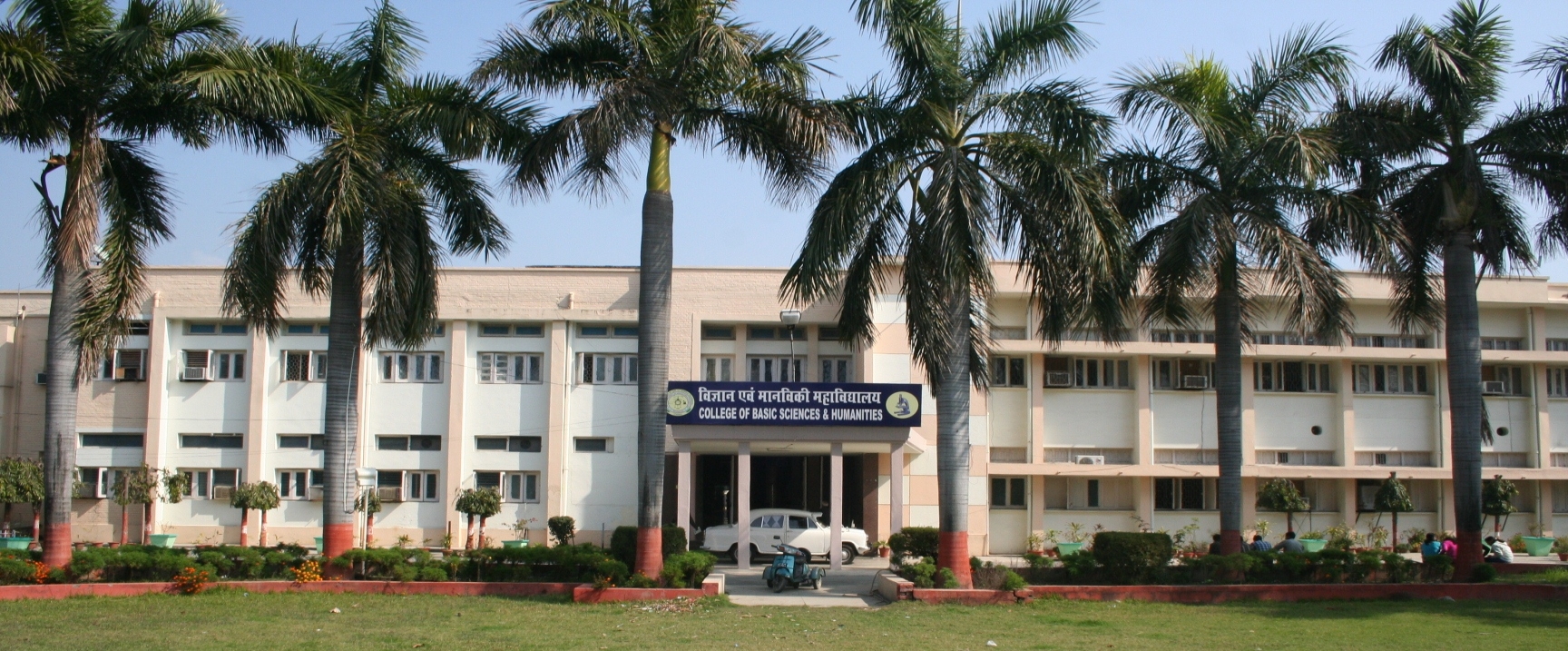
Early in the development of the University in 1960’s, the necessity for developing a Radiotracer Laboratory was realised due to the unique importance of Radiations and Radioisotopes in modern agricultural and basic research. The Radiations and Isotopic Tracers Laboratory (R.I.T.L.) was constructed under the guidance of BARC, DAE (Govt. of India) in the College of Basic Sciences & Humanities and recognized as a ‘B’-class laboratory by A.E.R.B. (Govt. of India) for handling/use of radioisotopes. The laboratory functions primarily as a Central Research Facility for the university. It has emerged as an active centre for inter-disciplinary teaching and research involving radioisotopes in basic, agricultural & veterinary sciences, as also in engineering and biotechnology.
The Laboratory was formally inaugurated on November 17, 1970 by the Hon’ble Governor of U.P., Dr. B. Gopala Reddy, and the laboratory building became ready for occupation in 1978.
The Radiations and Isotopic Tracers Laboratory is continuously motivated to provide research facilities to our stakeholders in some of the cutting-edge areas of basic, agricultural and allied sciences.
The Laboratory has successfully established 06 state-of-the-art thematic research laboratories — Beta Lab, Soft Beta Lab, Gamma Lab, Radiochemistry Lab, Decontamination Lab, and Radiobiology Lab. In addition, a Gamma Irradiation facility (GC5000) is available in RITL, which is invariably utilised by University and outside-University researchers.
More than 100 Master’s and 90 Ph.D. students have completed their degree using the research facilities of RITL. Apart from research, RITL has also conducted awareness and training workshops for researchers in collaboration with BARC scientists.
Functions of the Laboratory
- To procure radioisotopes and radio-labelled compounds for the users.
- To plan, guide & monitor the radio-tracers experiments.
- To manage the radioactive waste and radiation safety of users.
- To maintain liaison between the University departments and also with the Division of Radiological Protection, Atomic Energy Regulatory Board (Government of India), and Board of Radiations and Isotopes Technology (BRIT, D.A.E.) as far as use of Radioisotopes is concerned.
- To assist the university scientists in the planning of their research proposals and execution of the research projects in which the radioisotopes or radiations are used.